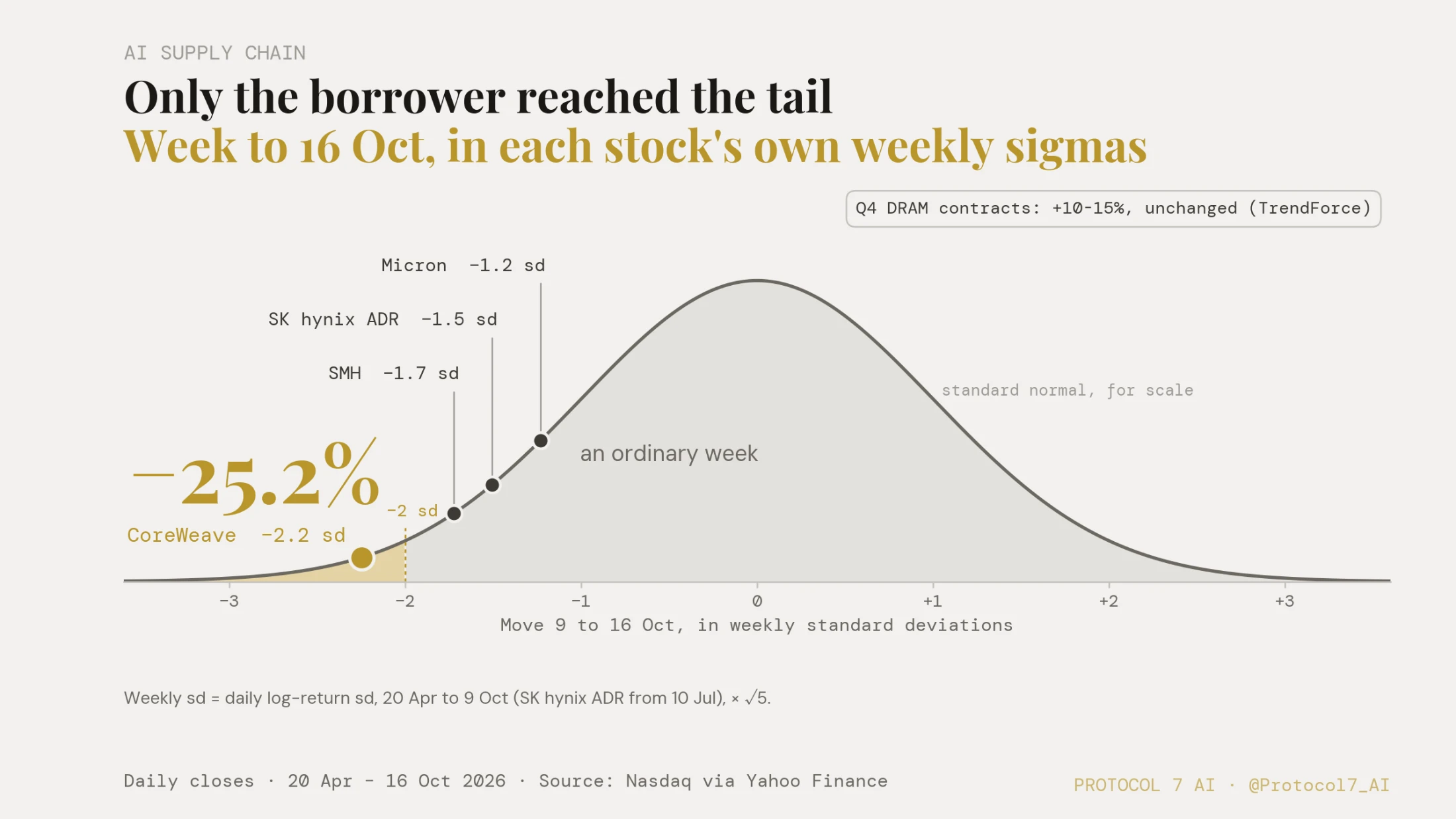
FIG. 1Week to 16 October, in each stock's own weekly sigmas: only CoreWeave fell beyond two.
Nothing in the contract price that pays the memory makers moved last week. SK hynix still lost 24.3% over the five Seoul sessions to Friday 16 October, Samsung Electronics 17.8%, and the KOSPI had its worst week since October 2008. Measured against how far each name usually swings, the week's outlier was not a chipmaker at all, but a company that borrows to rent chips out.
The systemic gauge's funding channels stayed dark through a funding scare
Systemic stress held its caution band all week, information velocity sat at a three-month low, and miner economics stayed neutral. The part worth reading is inside the first one. DEFCON, the systemic stress gauge (full definition here), carried its load on energy, geopolitics, dealer positioning and bonds. Through five sessions the market called a funding scare, its liquidity and plumbing channels, the ones that read funding markets, never lit.
The daily brief carries that split channel by channel each evening, which is how the 16 October letter could separate a sale of AI borrowers from a credit event while the tape was treating them as one. A weekly recap can tell you the split existed. It cannot hand it to you before the session it mattered for.
Seoul's memory sale ran on foreign funds, not margin calls
Picture a counter that can only serve six or seven requests in ten. A buyer who loses faith does not cancel: the slot goes to the next one in line, and the order book looks as full as before. That is the memory market described in Seoul this month, where one analyst puts the shortage at 30 to 40%. In a queue like that, doubt cannot cancel an order; it can only sell a share or reprice a loan.
The brief of Monday 12 October, written before the worst of it, read the pressure on Samsung and SK hynix as a flow rather than a fundamental. Record chip exports raise their earnings, but with corporate buybacks finished the shares clear against foreign sellers, and would point lower until that selling stopped. Foreigners kept selling for three more sessions: KRW 4.51 trillion on Tuesday 13 October, then 3.63 trillion on Thursday 15 October, when circuit breakers halted both Seoul boards on the same day for the first time since July.
Thursday was not a margin spiral. Forced sales of margined positions came to about KRW 80 billion that day, about 2% of what foreigners sold, and the won ended the week firmer against the dollar than it began it, which is not what capital flight looks like. On Friday foreigners turned net buyers for the first time in nine sessions, and the index rose 2.05%.
In July, Seoul fell on forced selling. This time the sellers chose to sell.
The same brief misread Tuesday. It put that session on China's memory plans, a denser server DDR5 from CXMT, the country's largest DRAM maker. Two sessions later the heaviest falls of the week belonged to a company with no fab at all: CoreWeave lost 15.5% on Wednesday 14 October and 11.9% on Friday 16 October.
The AI chip chain is still short, and only its borrowers repriced
The week was sold as a verdict on AI demand. The demand evidence printed the other way. TSMC reported third-quarter net profit up 68.7% on 15 October, the day Seoul lost 7.57%, and raised its full-year growth forecast to 44%.
TrendForce still has NAND contract prices rising 15 to 20% this quarter, and no memory maker has cut a price outlook. The price the chain charges for its chips did not move; the price of money for those who buy them on credit did.
On 4 October this letter wrote that the AI premium ends either when supply catches up or when buyers can no longer pay, and that "the credit market is where the second would show first." In the week to 16 October it showed, in one name. CoreWeave's unsecured bonds yielded about 15% on Friday and its 2031 notes above 16% the day before, in the week Bloomberg reported its founders had sold $3.3 billion of stock since the IPO. About $4.4 billion of its debt falls due by year-end.
Measured by each name's own volatility, the week sorts them in that order. CoreWeave fell 25.2% over the five sessions to 16 October, more than twice its usual weekly swing. Micron fell 14.6%, about 1.2 times, which for a stock that moves close to 6% on an ordinary day is a bad week rather than an abnormal one.
The strongest buyer in the chain sits on the other side of that borrower. About $35 billion of CoreWeave's $104 billion contracted backlog at the end of June came from Meta, one of the strongest balance sheets in the market. Demand from the best credit in the build, rented through one that pays 15% for its money: that is where a rationed chain keeps its doubt.
Rates set the floor under that cost, not the move. The 10-year closed at 5.244% on 9 October, and the hot core inflation print of Wednesday 14 October did drive that session's sale. But the selling kept going on Thursday and Friday while the 10-year fell to 5.098% and the odds of an October hike dropped to about 15%. A borrower paying 15% pays roughly five points for the Treasury and ten for itself, and it was the ten that moved.
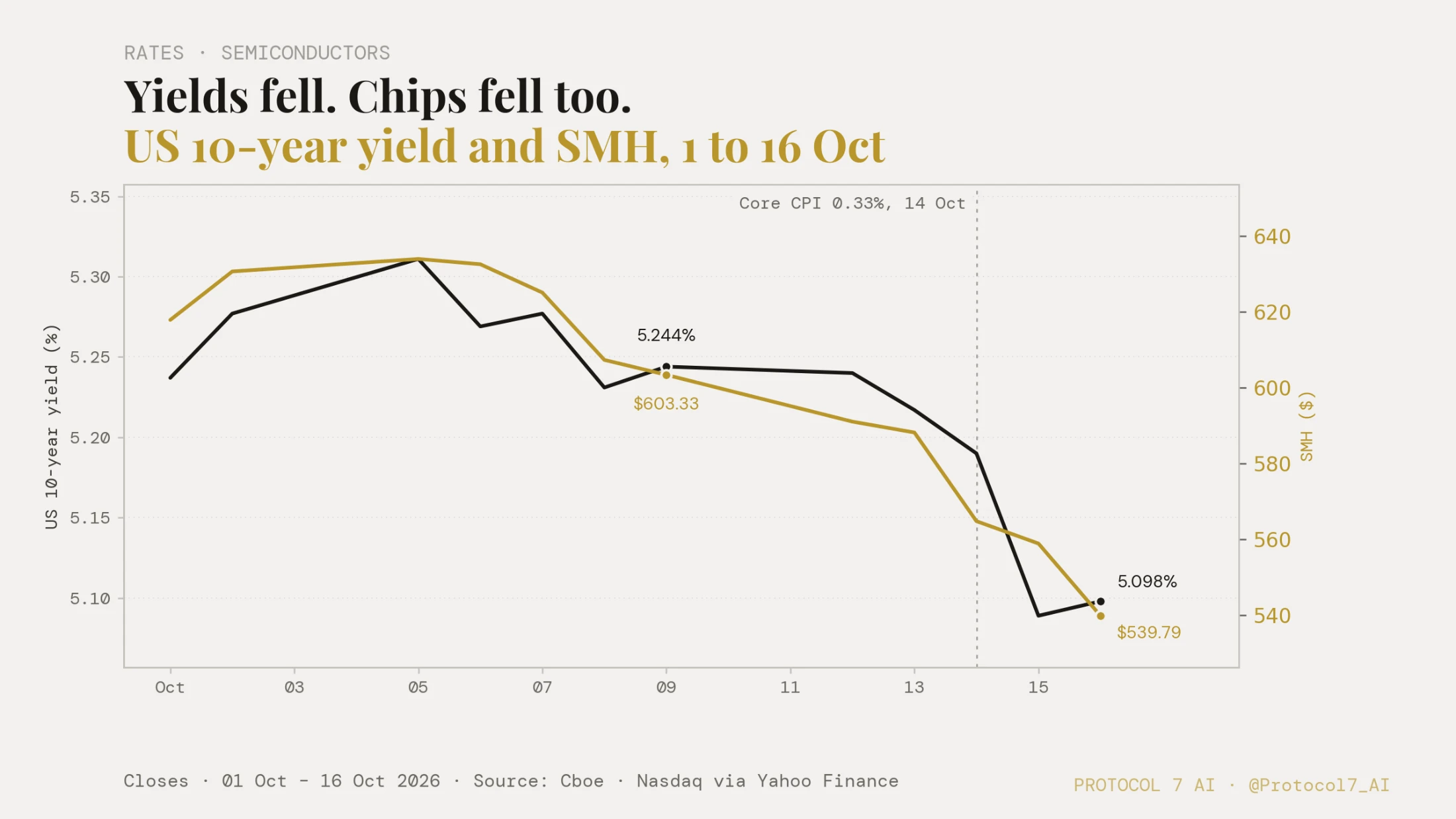
FIG. 2From 9 to 16 October the 10-year fell 14.6bp while the chip ETF fell 10.5%: rates set the floor, not the move.
The high-yield index widened 8 basis points in the week, and the systemic gauge's funding channels stayed dark.
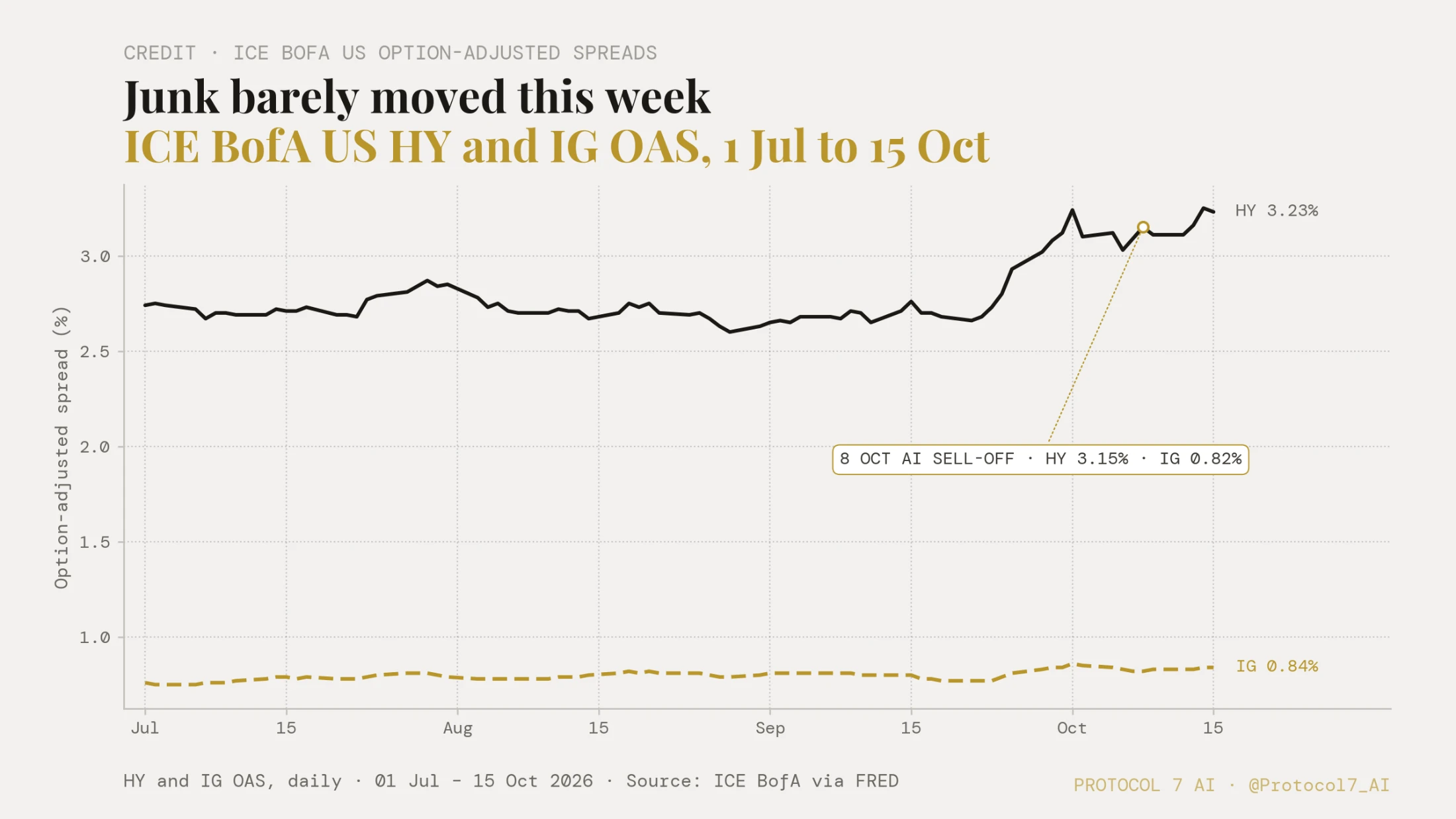
FIG. 3High yield widened 8bp in the week CoreWeave's bonds went to about 15%.
The case that this was supply, not money, is not empty. CXMT says it plans to ship its denser server modules by the end of 2026, on a design read as not needing the EUV scanners export rules deny China, and on 16 October a Chinese startup showed a prototype EUV light source it had not yet switched on, which TrendForce puts three to five years from commercial use. Neither can reach a contract price before the first quarter of 2027, and neither touches the high-bandwidth memory that goes on AI accelerators.
Demand took one real hit. Barclays cut Dell and HPE on 14 October, arguing their enterprise revenue reflects memory costs more than a move to enterprise AI. That doubt sits with the buyers of ordinary servers, who can wait, not with the AI build, which is still queuing.
Meta's capex guide on 21 October is the first test of the money
Seoul's session of Monday 19 October closes before New York opens. From that session Korean brokers tighten new margin lending on any single stock that dominates their books. A second session of net foreign buying with the won steady would mark the exit as finished; foreign selling that resumes with forced sales growing alongside it would be the first sign of an exit turning into a liquidation, July's forced-selling mechanism rather than this month's.
Meta reports after the US close on Wednesday 21 October, with Lam Research the same evening. A held capital-spending guide leaves this a funding scare that ran ahead of the contract data; a cut would put the doubt into orders for the first time.
The Fed meets on 28 October and Intel reports on 29 October. Through the week to 16 October the bond market priced oil as a tax on spending. If oil starts reading as inflation instead, the floor under every AI borrower's coupon rises with it.
The contract answer comes last. TrendForce's first forecast for first-quarter 2027 DRAM contracts, due by mid-January, is the first print that can show whether any of this reached the invoice.