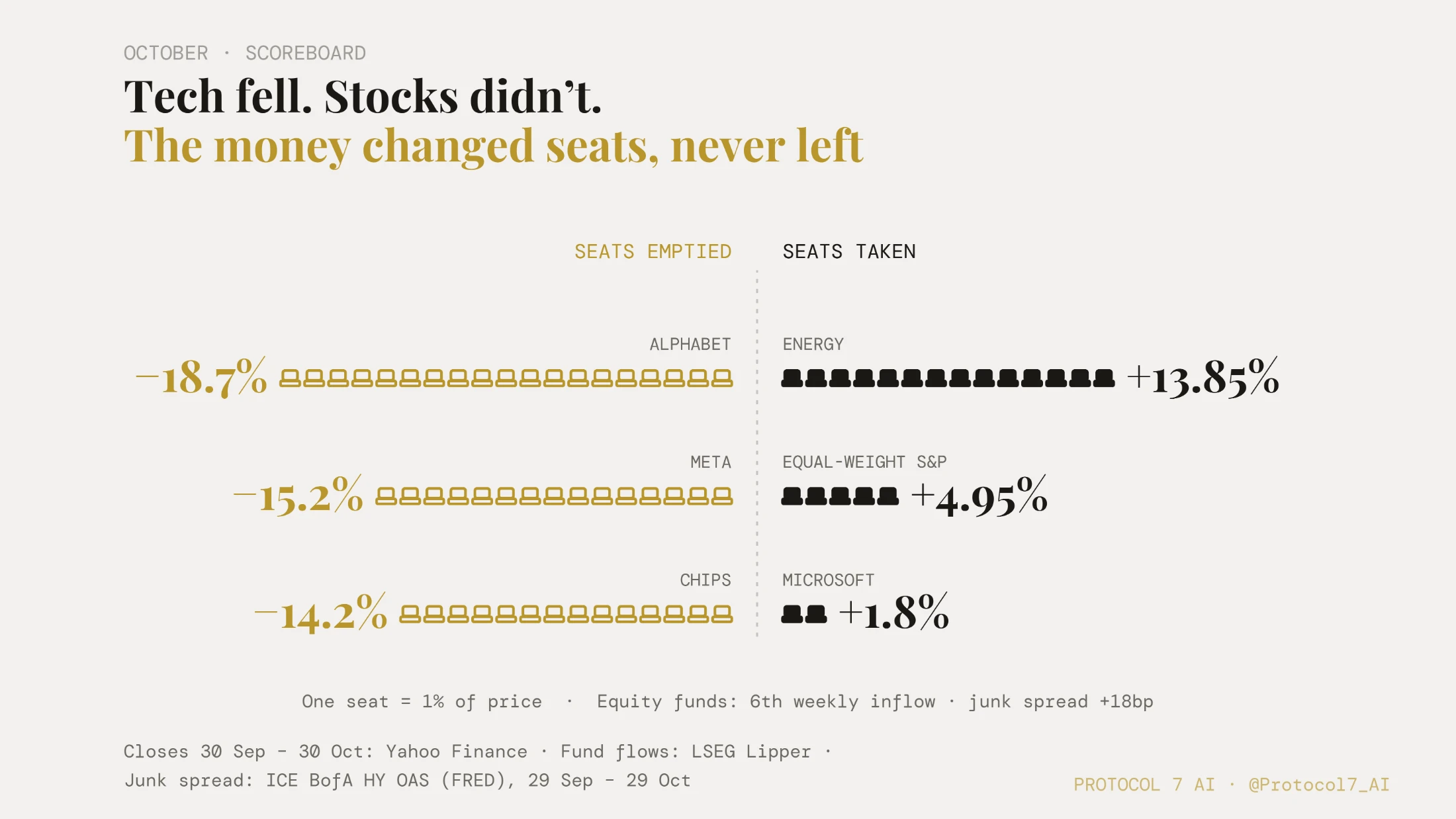
FIG. 1October's scoreboard: the AI spenders and chips paid, energy and the average stock got paid, and junk credit barely moved.
For years the most reliable buyer of Meta's shares was Meta. On 26 October it announced $35bn of new stock and a programme to sell up to $60bn more from 2027. Across October the semiconductor ETF lost 14.2% while the equal-weight S&P 500 gained 4.95%, and the junk-bond spread widened only 18bp.
Systemic stress peaked with oil and the Fed, before tech's worst day
Protocol 7 runs three gauges (definitions here). DEFCON, the systemic-stress gauge, rose to elevated on Wednesday 28 October for the first time since 23 September, on the day of the Fed's hawkish hold, carried mostly by energy and by a market-plumbing channel that had been close to silent all month. On Friday, the day the Nasdaq-100 fell 3.46%, it was back at caution. AlphaScout, the information-velocity gauge, moved up from low to moderate, pushed by crypto after the Binance theft. DAEMON, the miner-economics gauge, held neutral.
Equal weight held while the Nasdaq-100 broke, as the briefs had framed it
A daily thread opened on 19 October held that the repricing of AI-infrastructure debt would stay with named borrowers rather than spread to the junk market. The weekly brief of 24 October called the market a rotation inside risk, with stress priced in bonds and single names and not yet in index hedges. The week that followed tested that twice.
On Thursday 29 October Alphabet fell 12.6% after its quarterly filing showed $51.4bn of capex against $42.3bn of operating cash. The equal-weight S&P 500 rose 1.2% the same session. On Friday the Nasdaq-100 lost 3.46%, about 2.4 standard deviations of its ETF's daily swings, and equal weight fell with it for the first time, by 0.79%.
Over October the semiconductor ETF lost 14.2% and bitcoin 8.1%, while the S&P 500 slipped 0.9%. Equal weight gained 4.95% and the energy fund 13.85%. The 10-year Treasury yield fell 36bp to 4.929%, and equity funds took a sixth straight weekly inflow to 28 October.
Measured against each fund's own volatility, the loud move is the less informative one. The semiconductor ETF swings about 3% a day over six months, so its October loss is roughly one standard deviation for a month.
The equal-weight fund swings about 0.7% a day, and its gain comes to about 1.6 standard deviations. The quiet fund moving is the signal: the money stayed in equities and left only the companies that need outside money to keep building.
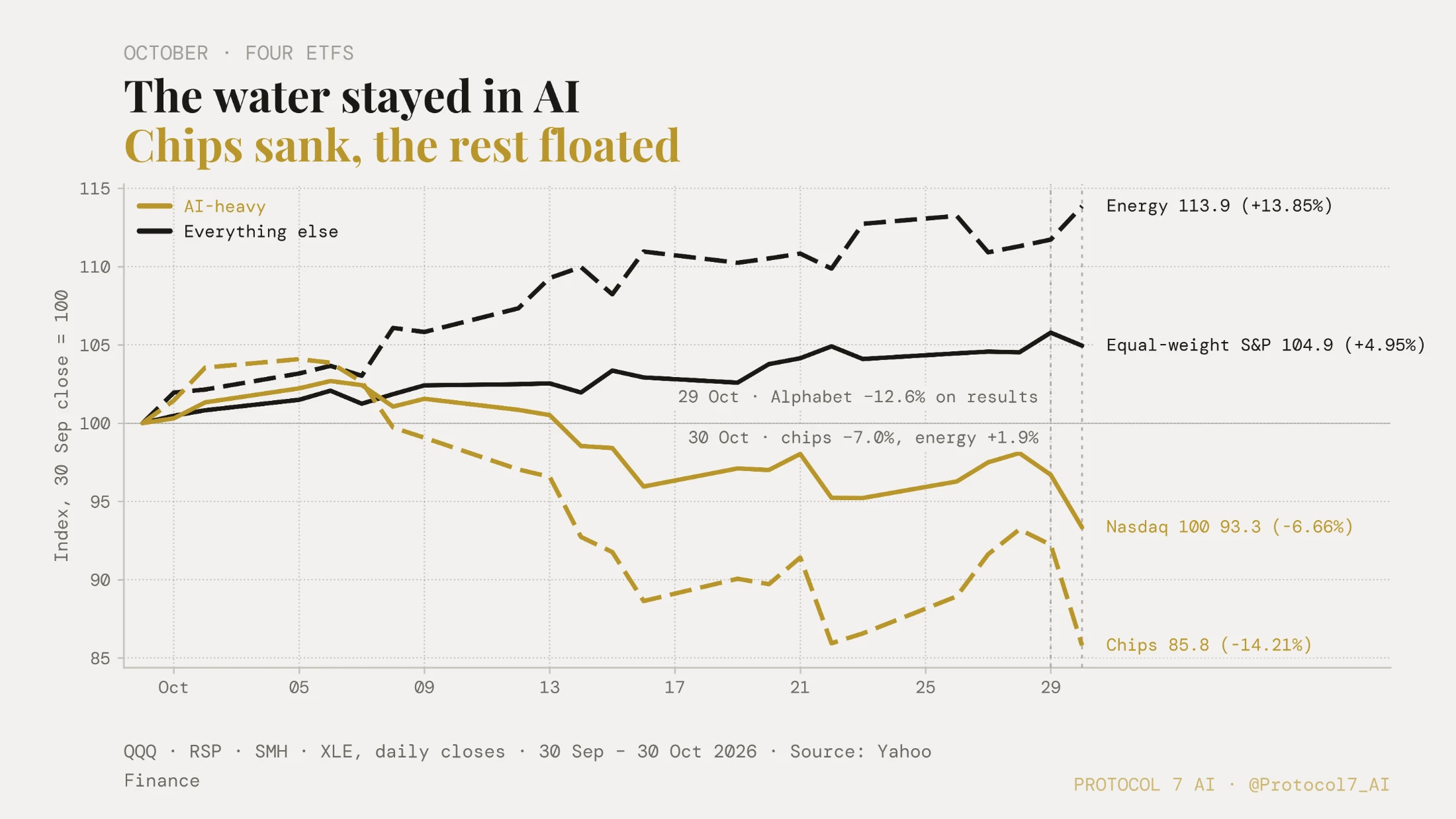
FIG. 2Equal weight and energy rose through October while the Nasdaq-100 and chips fell; 30 October was the first joint drop.
Credit has worked like a ship's bulkhead. The flooded compartments are the names that fund AI with someone else's money: CoreWeave's 2031 bonds near 15%, an AI lab rated BB+ by KBRA, Broadcom's five-year default swaps at a record 175.4bp on 29 October.
The rest of the hull took spray, not water. The ICE BofA high-yield spread read 3.26% for 29 October, 18bp wider than a month earlier, in a month when the semiconductor ETF lost 14.2%. Equity money moved between dry compartments instead of leaving the ship.
The daily of 24 October expected the strain to broaden into the junk index, while noting the index had not caught up. It still has not: the spread tightened to 3.14% for 28 October, and the strain went into supplier stocks and single-name swaps instead.
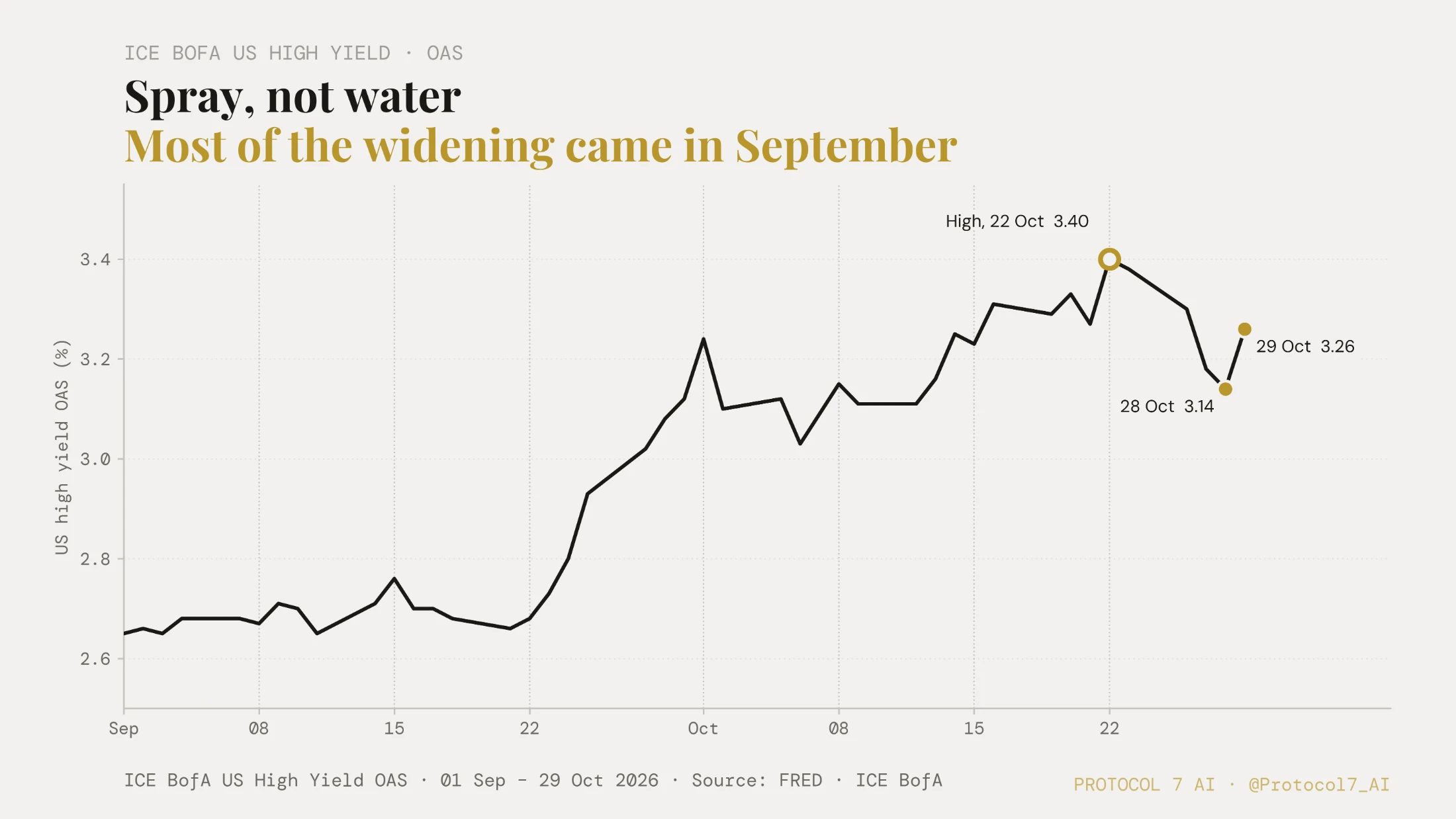
FIG. 3Most of the junk-spread widening came in late September; October's tech sell-off added 18bp.
SK hynix is sold out to 2029, and the AI bill changed hands
SK hynix said on 28 October that long-term agreements cover more than half of its 2027-28 capacity and that its DRAM and HBM are sold out through 2029. Korea's September chip output rose 19.2% on the month. The stock still fell 7.08% on 30 October.
What changed is who pays. Each route a spender uses to fund capex beyond its cash hands the risk to a different holder. Meta's route is stock, and S&P moved its outlook to negative on 30 October, forecasting a $71bn free-cash-flow deficit for 2027. Microsoft's route is debt: at least $25bn of AAA bonds, placed easily.
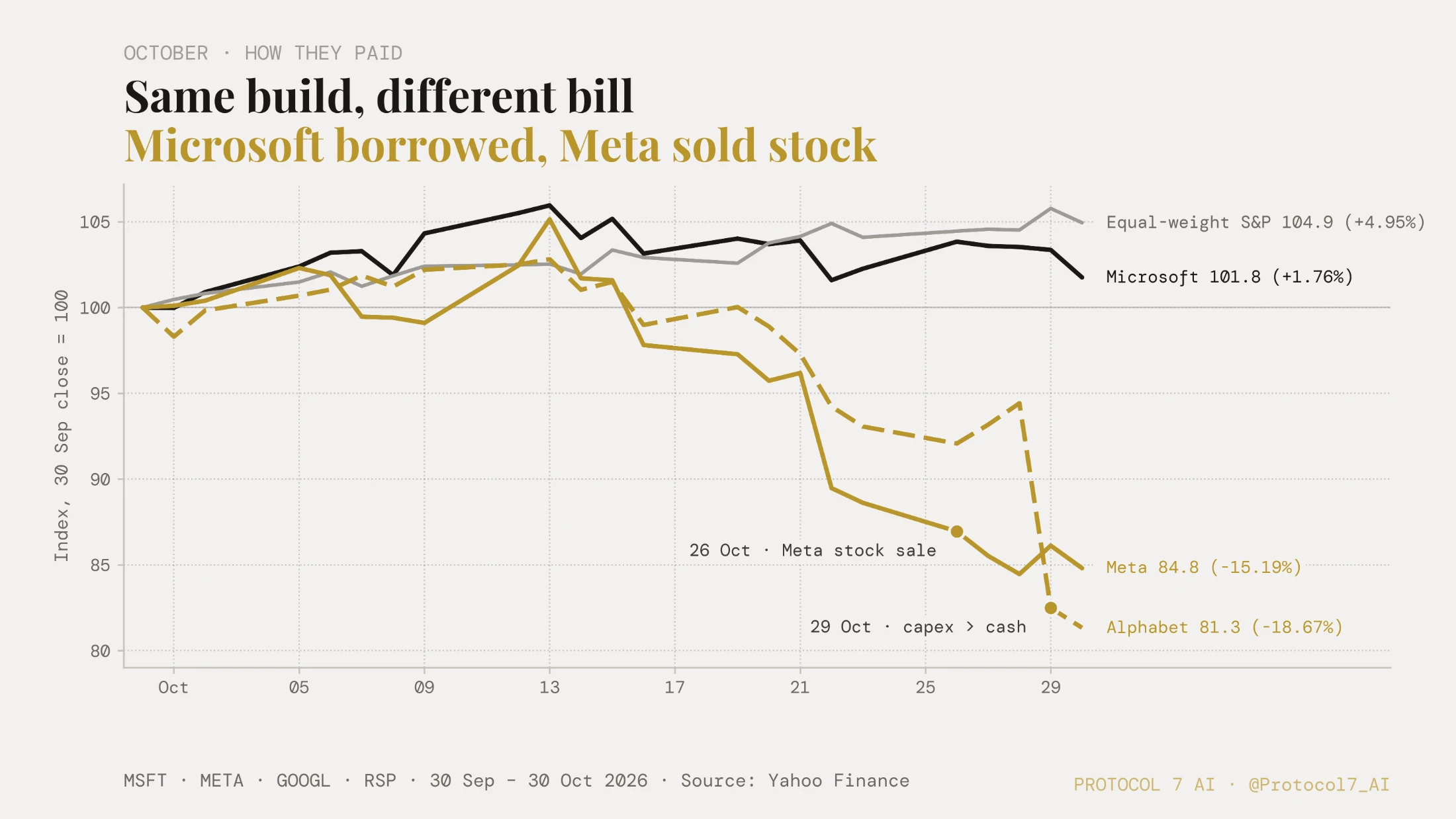
FIG. 4Microsoft funded with AAA debt and held; Meta sold stock and Alphabet's capex outran its cash.
The third route is the supplier's balance sheet. Broadcom stands behind the resale value of the chips in a $63bn vehicle that leases them to Anthropic, so its own credit now carries a borrower rated below investment grade. Its shares rose 9.4% from 23 to 28 October as the deal was announced, and its swaps hit their record the next day.
Capex above operating cash turns every AI spender into an issuer, and the market is now pricing the issuers.
On record: the AI-borrower call held, the high-yield call did not
Both entries come from Protocol 7's public thesis register, dated when they were published.
Entered 18 October: the AI hardware sell-off of 12 to 16 October had repriced the cost of money for AI capacity borrowers, not their orders, with Meta's capex guidance of 21 October as the observable. The register scored it CONFIRMED.
Entered 16 September: the equity decline of 15 September was a discount-rate repricing rather than a credit event, so US high-yield spreads would not widen through 300bp while the Fed delivered the hike already priced. They crossed it at 3.02% on 28 September, and the register scored it WRONG.
Apple, AMD and payrolls test the credit bulkhead from Monday
The system's base case is a mixed regime tilted toward risk-off over the next two to three weeks, inside a longer transition that runs to January: from a Treasury market carried by a falling term premium toward one where funding stress decides what gets paid.
The dates, all in the week of 2 November:
- Monday 2 November, after the US close: Apple, the first heavyweight print since Friday's breadth break.
- Tuesday 3 November: AMD after the close, the first chip-supplier guide since Intel's, and the US midterm elections.
- Wednesday 4 November: the Treasury's quarterly refunding.
- Friday 6 November: US payrolls.
Nvidia reports later in November, and Anthropic's listing follows.
A rotation turns into a sale when equal weight starts falling in the same sessions as the Nasdaq-100. Water crossing into the high-yield index would be the larger signal, and equity hedges are not set for it: the VIX closed at 19.42 on 30 October, unchanged on the week, with its curve still sloping upward. Supplier guides showing customers paying as contracted would hand the heavyweights their bid back. Oil is the leg that could remove October's cushion, by lifting inflation compensation into a December hike and taking away the Treasury bid that absorbed the fear.
The daily brief carries those paths fully specified, each with the print that would trigger it and the line in the junk market that separates a rotation from a sale. Those move with every session, which is why they live in the daily and not in a Sunday piece.
The regime turns when the water gets past the bulkhead.