Yttrium shortage: 180-fold price jump, jet engines exposed
China's licences split the yttrium market in two. The oxide is up about 180-fold outside China, and no engine or chip-tool maker has named it yet.
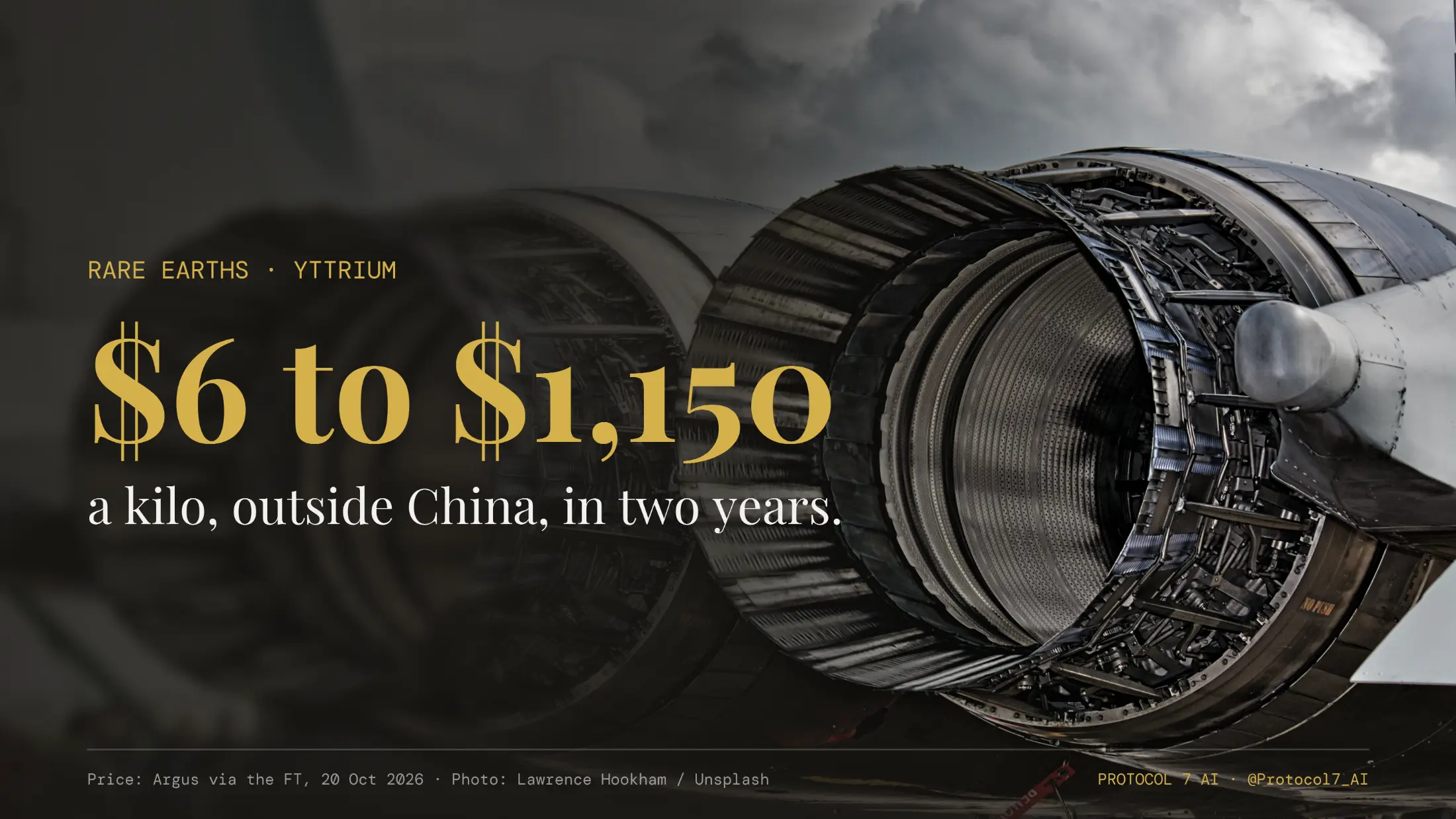
FIG. 1Outside China, a kilo of yttrium oxide went from $6 to $1,150 in two years. Photo: Lawrence Hookham / Unsplash
You have probably never bought yttrium, but you have flown on it. Outside China its oxide now costs about $1,150 a kilo, against roughly $6 two years ago and about $9 inside China today. Lam Research, GE Aerospace and RTX all reported this week, and none of them said the word.
Yttrium is the paint on a jet engine's hottest blades
The blades in the hot section of a jet engine sit in gas hotter than their own metal can survive. What keeps them alive is a ceramic coat a fraction of a millimetre thick, zirconia stabilised with yttrium oxide, sprayed on like paint. Without that coat, the blade is scrap.
The same oxide lines the inside of the plasma chambers that etch chips, because it stands up to the plasma. Two industries, one thin layer, and almost all of it starts in China.
Yttrium has one real source and no good substitute
Yttrium is not mined on its own. It comes out alongside other rare earths, mostly from clay deposits in southern China and in Burma, and the USGS puts world output at 10,000 to 15,000 tonnes of oxide a year. China exported about 1,600 tonnes of it in 2025, mainly to Japan, South Korea, the US and Germany: the countries that build chip tools and jet engines.
The US imports all of the yttrium it uses. At Mountain Pass, America's main rare earth mine, yttrium is about 0.12% of the rare earths in the ore, a trace. The fallback is weaker too: calcium or magnesium oxide can stabilise zirconia, but the USGS notes the result is usually less tough. There is no cheap way around this metal.
Beijing has required export licences for yttrium since April 4, 2025, and the licences split the market in two: inside China the oxide stays at domestic prices, outside it buyers bid for whatever gets licensed.
Japanese officials told the Financial Times they are "months, not years" from running short, and Tokyo has asked Washington to help persuade Beijing.
The price exploded and the users barely noticed
Outside China the oxide went from about $6 a kilo at the start of 2025 to roughly $270 by November that year, and to about $1,150 now. That is roughly 180-fold in two years.
That $1,150 is an Argus assessment, not a screen price, and other assessments differ by grade and delivery point; all of them are a multiple of what the oxide cost in 2024. Keep the two multiples apart: about 180 times measures the outside price against two years ago, about 128 times measures it against the $9 a buyer pays inside China today.
It has not shown up in the companies that use it. A layer a fraction of a millimetre thick is a small input against the price of a finished engine part or etch tool, even at 180 times the old price. The risk sits somewhere else: a part that cannot be finished because one input did not arrive.
That risk reaches the accounts as a delay, and delays tend to be reported as "supply chain constraints", without names.
The October 20 brief set the test before Lam reported
The October 20 daily brief named the four places the squeeze would surface: engine overhaul at GE Aerospace and Pratt & Whitney, and chamber parts at Lam Research and Tokyo Electron. It wrote down the test the same day: the first of them to name yttrium or yttria as a constraint, on a call or in a filing, by January 31.
Lam reported the next evening. It cited "supply chain constraints for certain components" and clean-room space, said some December-quarter shipments would move into March, and closed 11.8% lower on October 22. It did not name the component, and nothing ties it to yttrium. GE Aerospace mentioned castings and RTX mentioned critical minerals, and neither named the metal either.
The same brief read the squeeze too narrowly in one respect. It said the oxide trades on bilateral contracts, so the pressure would show "as allocation and lead times, not as a price". Argus had the ex-China price near $1,150 a kilo that week.
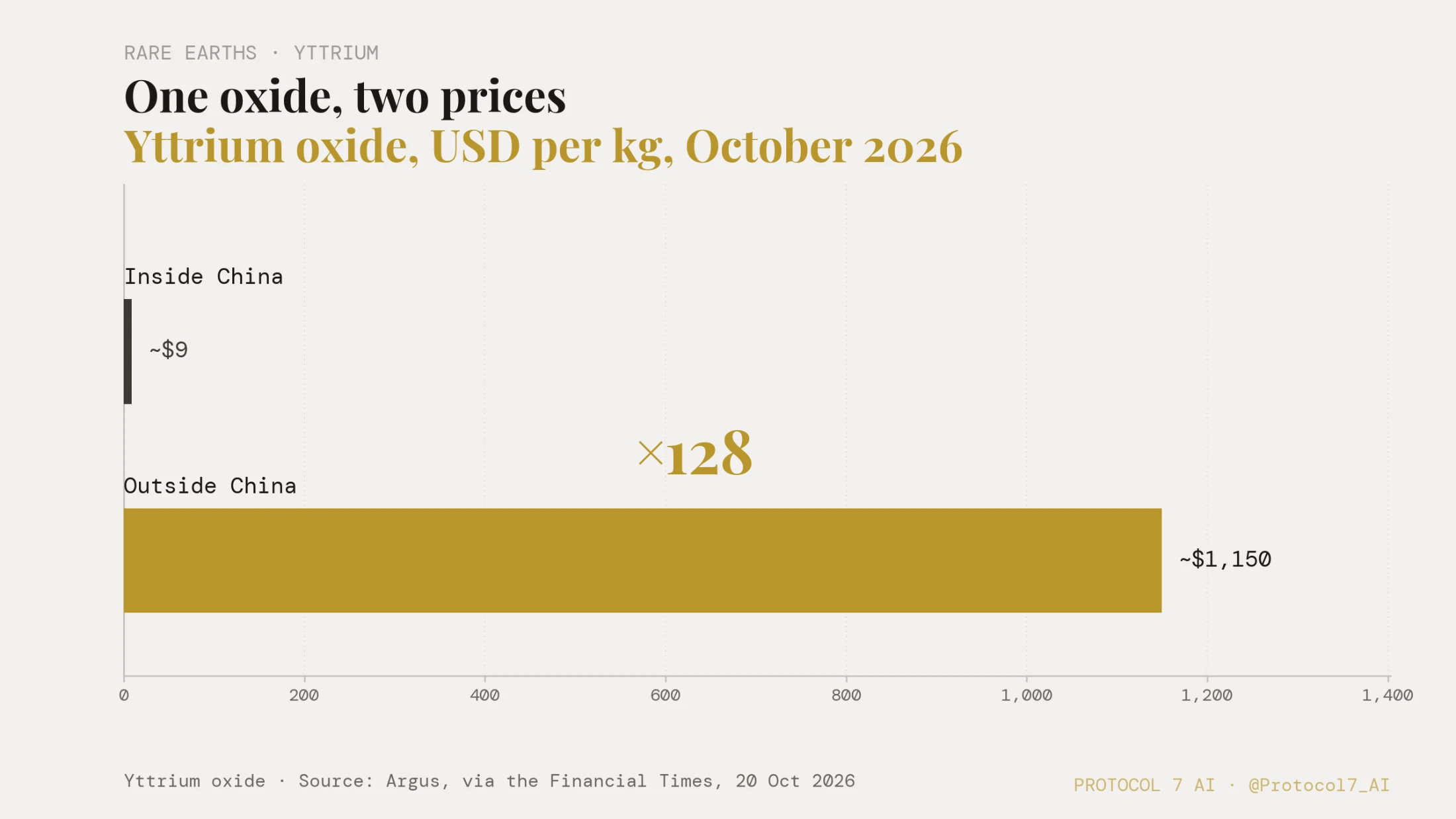
FIG. 2Inside China a kilo of yttrium oxide costs about $9; outside it, about $1,150 (Argus, via the FT, October 20).
The yttrium story is being told as a mining story
Most of the coverage this autumn has asked who can dig it up: Lynas in Malaysia, with a heavy rare earth plant that includes yttrium due around 2028; Less Common Metals in Britain, which poured its first commercial yttrium metal in April; USA Rare Earth's Texas project, also aimed at 2028. Even the bearish notes are about miners whose shares have lagged the oxide.
None of that changes the next two years. The supply that matters before 2028 is whatever China licenses and whatever Japan and the engine and tool makers already hold in stock. The useful question is who runs out first, not who mines next.
That question gets answered in company disclosures. Naming is the strictest test and it can miss a real squeeze hidden in unnamed delays, which is why the shipment timing of tool makers and the conversion of engine overhaul backlogs are the second place to look.
Tokyo Electron is the next company that could say the word
Tokyo Electron, which also builds etch tools, reports at the end of October, and etch chambers across the industry use the same kind of coating. GE Aerospace carries a commercial services backlog above $170 billion, and overhaul means replacing coated hot-section parts. The pace at which that backlog turns into revenue is the number to watch, more than orders.
On the policy side, China's October 2025 rare earth controls stay suspended until November 10. Yttrium was never part of that truce: it sits under the April 2025 licensing regime, which nobody has eased.
If a company names yttrium, the story moves from Japan's stockpiles into an earnings line, and the market will have a reason to care about a metal it has spent two years ignoring. If none does by the end of January, either the stockpiles held or the shortage is hiding in unnamed delays, and the backlog numbers will say which.